








Description
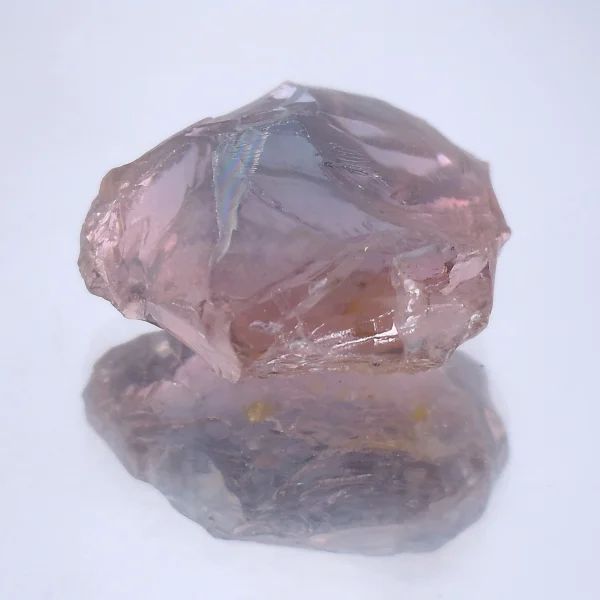
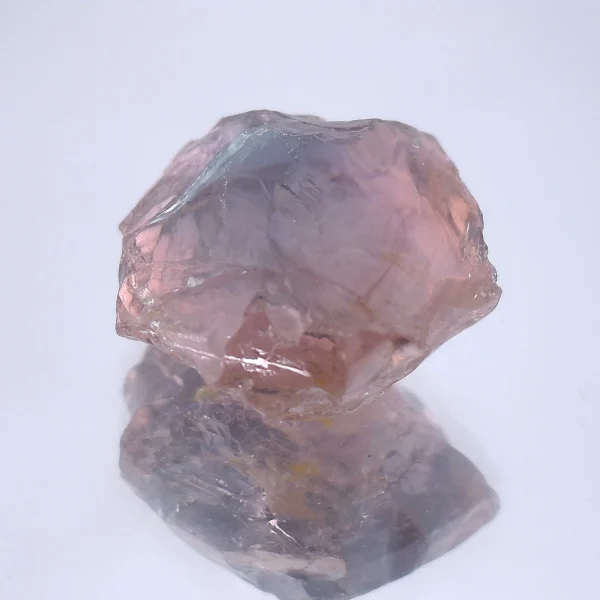
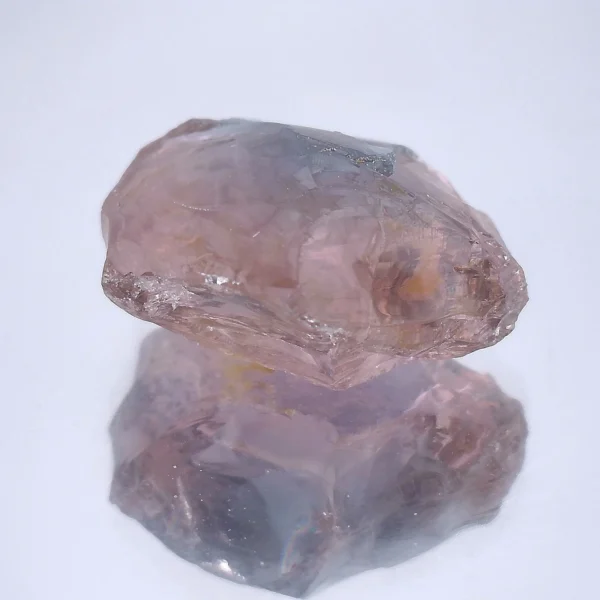
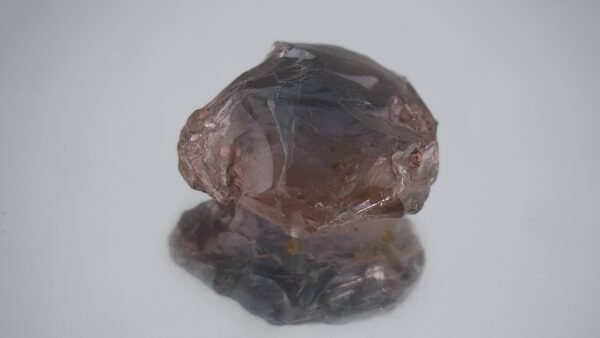
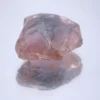
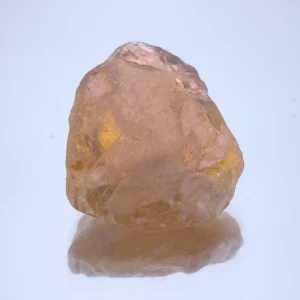
Pink, with a blue secondary zone, is what this 7.35ct bi-color tourmaline rough from Nigeria shows. This stone is eye clean. The photos show a blocky outline measuring 13.8×12.12×7.32mm, and oval or cushion are the recommended shapes for it.
Cutting Notes
Set the table so the pink and blue zones show together, with the color boundary running across the length of the stone. The lapidary notes ask for a slight windowing effect, so pre-form toward that and let light pass through both zones, even if you give up a little weight. Decide between oval and cushion before you lock in the table position, because the blocky outline suits either one but the table has to sit where both colors read well.
Bi-color tourmaline is brittle and heat sensitive, so keep the stone cool and avoid heavy pressure on the lap. It is hard, at Mohs 7 to 7.5, but its cleavage is poor and it breaks with a conchoidal fracture, so take the grinding slowly. Keep pavilion angles above the critical angle of about 38 degrees, because angles near or below it let light leak out. The material is strongly pleochroic, so check the color from more than one direction as you work. High birefringence can make facet edges look doubled through the stone.
Cutter’s tip: Pre-form for a slight windowing effect so light returns through the pink and blue zones, and accept a small weight loss to keep both colors bright.
Every stone is filmed on video before it is listed, so what you see is the stone you get. For background on Bi-Color Tourmaline, see the GIA Tourmaline guide. Browse more Bi-Color Tourmaline faceting rough from Jackson’s Gems.
Related Guides
- Ethiopian Paraíba Tourmaline: What Cutters Should Know
- Masterclass: Understanding Pleochroism & Gemstone Orientation
New to cutting Tourmaline? See the Lapidary Guide.
Reviews
There are no reviews yet.