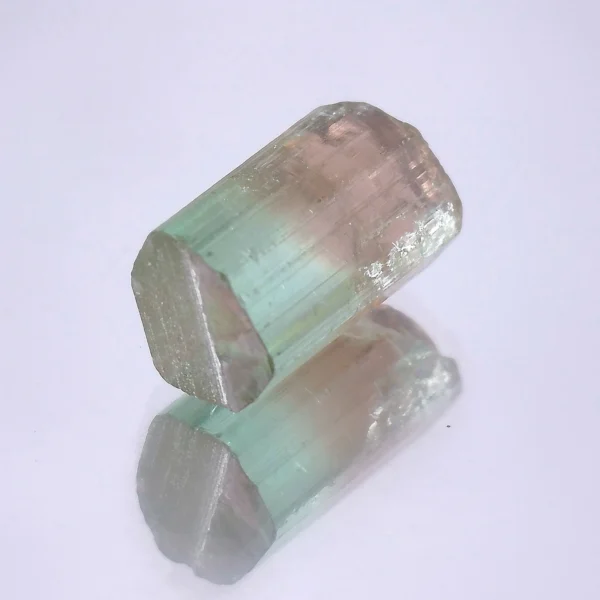
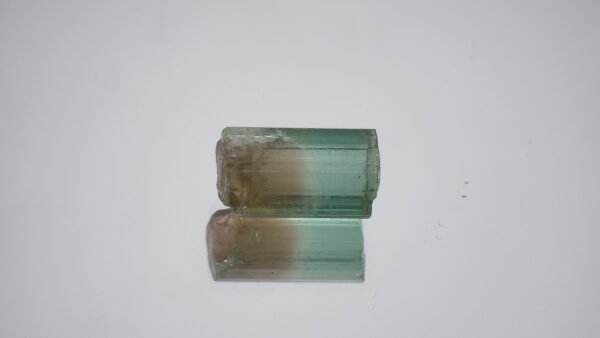
3.94ct Bi-Color Tourmaline rough, front right view
3.94ct Bi-Color Tourmaline rough, right side view
3.94ct Bi-Color Tourmaline rough, back right view
3.94ct Bi-Color Tourmaline rough, back view
3.94ct Bi-Color Tourmaline rough, back left view
3.94ct Bi-Color Tourmaline rough, left side view
3.94ct Bi-Color Tourmaline rough, front left view
3.94CT Bi-Color Tourmaline Rough

3.94CT Bi-Color Tourmaline Faceting Rough | Uncut Gemstone

$23.64

Eye clean 3.94ct bi-color tourmaline rough from Nigeria, pink at one end with green along the length, measuring 10.7 x 6.34 x 5.63 mm. Best cut as cushion.

Variety: Bi-Color Tourmaline | Gem: Tourmaline | Weight: 3.94 ct | Size: 10.7×6.34×5.63mm | Color: Pink / Green | Origin: Nigeria | Clarity: Eye Clean | Treatment: None known

1 in stock

SKU: fWzg7ofQsXo Categories: ,

Technical Specifications & Gemological Properties

Specifications for 3.94CT Bi-Color Tourmaline Faceting Rough
Carat Weight 3.94CT
Dimensions 10.7 × 6.34 × 5.63mm
Origin Nigeria
Treatment None known
Color Pink
Clarity Grade Eye Clean
Gem family Tourmaline
Variety Bi-Color Tourmaline
Secondary color Green
Refractive Index 1.62–1.64 †
Hardness (Mohs) 7–7.5 †
Optic Character Doubly refractive, uniaxial (−), birefringence 0.018–0.020 †
Pleochroism Moderate to strong (dichroic) †
Specific Gravity 3.02–3.26 †

† Typical reference value for tourmaline; individual stones vary.

How to orient and cut this rough — Lapidary Guide

Description

At 10.7 x 6.34 x 5.63 mm, this 3.94ct bi-color tourmaline rough from Nigeria runs pink at one end with green along the rest of its length. This stone is eye clean, so the color is what you are cutting for. The recommended shapes are cushion and emerald. The pink end face has a broken, uneven surface in the photos, so look at it closely before you set the table.

Cutting Notes

Set the table so the color boundary runs across the length of the stone, since the long shape and the pink-to-green zones both favor that orientation. Pre-block with a dop stick angled to both color zones, because the material is dichroic and the two zones will not read the same from one angle. The pink end face is broken and uneven in the photos, so check it under a loupe before you commit a table position. Cushion and emerald both suit an elongated piece like this, and the emerald shape will show the length of the color most directly.

Bi-color tourmaline is brittle and sensitive to heat, so keep the stone cool on the dop and avoid heavy pressure when grinding. Its fracture is conchoidal and its cleavage is poor, so take the work in steady passes rather than forcing material off. Keep the pavilion angles above the critical angle, or light will leak out through the base and the stone will look dull and windowed. Because the birefringence is high, facet edges can look doubled through the stone, so judge the polish in good light before you finish.

Cutter’s tip: Pre-block with the dop stick angled to both the pink and green zones, then hold the rough under a light at each angle before you commit the table, because the two colors will not read the same from one direction.

Every stone is filmed on video before it is listed, so what you see is the stone you get. For background on Bi-Color Tourmaline, see the GIA Tourmaline guide. Browse more Bi-Color Tourmaline faceting rough from Jackson’s Gems.

Related Guides

New to cutting Tourmaline? See the Lapidary Guide.

Questions About This Bi-Color Tourmaline Rough

How should I orient bi-color tourmaline rough to show both colors?

Place the table parallel to the c-axis with the color boundary running across the length of the stone. That puts the pink and green zones face-up together. Dark material is often cut with the table parallel to the c-axis, while lighter material is cut with the table across it.

Why does bi-color tourmaline look different when I turn the stone?

The material is strongly pleochroic and dichroic, so each color zone can shift in depth and hue as the viewing direction changes. Pre-blocking with a dop stick angled to both zones lets you check the color from the angle you plan to cut.

How do I avoid windowing in bi-color tourmaline?

Keep the pavilion angles above the critical angle of about 38 degrees. Pavilions at or below that angle let light escape through the base, which leaves a dull window in the center of the stone.

Is bi-color tourmaline safe to cut on a machine?

Bi-color tourmaline is brittle and heat sensitive, so keep the stone cool and avoid heavy pressure. Steady passes with light pressure protect the rough better than pushing hard to speed up the work.

What should I check first on this 3.94ct piece?

Start with the pink end face, which shows a broken, uneven surface in the photos. Look at it under a loupe before you choose where the table goes, then confirm the color boundary with the stone angled on the dop.

Reviews

There are no reviews yet.

Be the first to review “3.94CT Bi-Color Tourmaline Faceting Rough | Uncut Gemstone”

Your email address will not be published. Required fields are marked *