Description
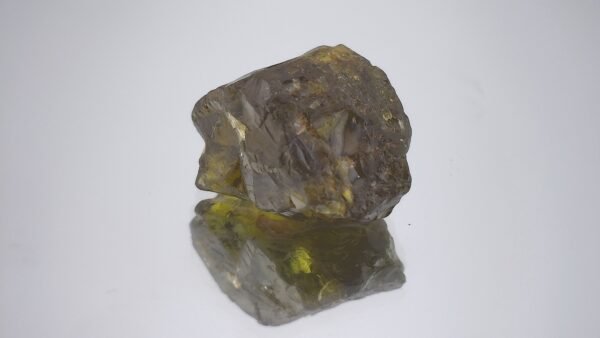
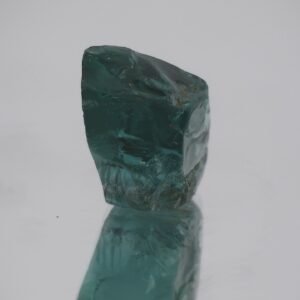
8.20CT Dravite Tourmaline Rough Evaluation
Geological Origins & Rarity
8.20CT Dravite Tourmaline Rough originates from the complex geological processes occurring within metamorphic and magmatic environments. Dravite, a brown to black variety of Tourmaline, is a sodium-rich aluminum borosilicate. Its formation typically occurs in lithium-rich pegmatites, granites, and schists. These environments provide the necessary elements – boron, aluminum, silicon, oxygen, sodium, and magnesium – under intense heat and pressure. The specific chemical composition, particularly the presence of iron and magnesium, dictates the characteristic brown hues of Dravite Tourmaline.
Dravite is relatively less common than other Tourmaline varieties like Rubellite or Indicolite, contributing to its increasing desirability among collectors. Significant deposits are found in countries like Brazil, Sri Lanka, Nigeria, and the United States (California and Maine). The rarity of gem-quality Dravite, especially pieces exceeding several carats, stems from the need for ideal geological conditions and the challenges in extracting clean, undamaged crystals. Finding an 8.20CT Dravite Tourmaline Rough with good potential for a vibrant finished gem is a true find. The specific geological history of this particular stone likely involved slow cooling within a pegmatitic vein, allowing for the development of well-formed crystals.
The presence of inclusions and fractures is common in Dravite, but a well-selected 8.20CT Dravite Tourmaline Rough will offer a balance between clarity and color, providing a lapidary with a workable piece of natural artistry. The geological journey of a stone like this, spanning millions of years, adds to its inherent value and appeal.
Optical Physics & Color Saturation
The optical physics of 8.20CT Dravite Tourmaline Rough are fascinating, influencing its potential for brilliance and color saturation. Tourmaline, in general, is a pleochroic gemstone, meaning it exhibits different colors when viewed from different angles. Dravite specifically displays strong trichroism – three distinct color zones. This is due to the anisotropic nature of the crystal structure and the way it absorbs light. Understanding this pleochroism is crucial when planning the cut of the finished gem to maximize color display.
The refractive index of Dravite Tourmaline falls within the range of 1.617 to 1.666, which contributes to its moderate brilliance. However, it’s the absorption of light that truly defines Dravite’s color. The brown hues are a result of iron content within the crystal lattice. The intensity of the brown can vary greatly, influenced by the concentration of iron and other trace elements. A well-proportioned 8.20CT Dravite Tourmaline Rough will have a saturation level that allows for a rich, warm color in the final cut. Light transmission is also affected by the clarity of the rough; fewer inclusions mean more light can pass through, enhancing the stone’s overall vibrancy.
Dravite possesses a hardness of 7-7.5 on the Mohs scale, making it relatively durable for jewelry applications. However, it is susceptible to cleavage, meaning it can fracture along certain crystallographic planes. This characteristic must be carefully considered during the cutting process. The 8.20CT Dravite Tourmaline Rough’s specific gravity (around 3.77) indicates its density, a factor in calculating the final carat weight after cutting.
Master Cutter’s Bench Guide
Approaching the cutter’s bench with an 8.20CT Dravite Tourmaline Rough requires a strategic mindset and a deep understanding of the material. Initial assessment is paramount: carefully examine the rough under magnification to identify inclusions, fractures, and the direction of the pleochroic colors. Planning the cut to maximize color and minimize flaws is the first crucial step. Given the trichroism of Dravite, the cutter must decide which color zone to emphasize in the final gem. Typically, a cut that showcases the most vibrant and saturated color is preferred.
Dravite Tourmaline’s tendency towards cleavage demands a gentle but precise cutting technique. Using a properly tensioned lap and a fine diamond wheel is essential. Slow, controlled passes are crucial to avoid chipping or fracturing the stone. Pre-forming the rough to remove excess material and establish the basic shape is often done with a scaife or a slow-speed saw. The dimensions of this particular 8.20CT Dravite Tourmaline Rough – 14.01×11.39×9.88mm – suggest a potential for a substantial finished gem, perhaps an oval, cushion, or round brilliant cut. However, the final shape will be dictated by the internal characteristics of the stone.
Polishing requires a progression of progressively finer polishing compounds, culminating in a final polish with diamond paste. Maintaining consistent pressure and speed is vital to achieve a flawless, mirror-like finish. Throughout the cutting process, regular inspection under magnification is essential to monitor progress and make adjustments as needed. A skilled lapidary can transform this 8.20CT Dravite Tourmaline Rough into a breathtaking gem, showcasing the stone’s natural beauty and potential. The goal isn’t simply to maximize carat weight, but to create a gem of exceptional brilliance and color.
Investment & Yield Potential
Investing in a gem-quality 8.20CT Dravite Tourmaline Rough, like this exceptional piece, represents a unique opportunity for both collectors and potential jewelry designers. While Dravite Tourmaline is not as widely recognized as some other Tourmaline varieties, its increasing rarity and unique aesthetic qualities are driving up demand. The value of a finished Dravite Tourmaline is determined by several factors, including color, clarity, cut, and carat weight. A skillfully cut gem from an 8.20CT Dravite Tourmaline Rough with vibrant color and good clarity can command a significant price in the market.
The gem market is influenced by trends and consumer preferences. Brown and earthy tones are gaining popularity, making Dravite Tourmaline an attractive option for those seeking unique and unconventional gemstones. Unlike diamonds, colored gemstones like Dravite Tourmaline are less subject to standardized pricing, allowing for greater potential for appreciation based on individual quality and desirability. The 8.20CT Dravite Tourmaline Rough, with its substantial size and potential for a high-quality finished gem, is a promising investment.
However, it’s important to note that investment in gemstones is not without risk. Market fluctuations and the skill of the lapidary play a role in determining the final return. For a collector, owning an 8.20CT Dravite Tourmaline Rough offers the satisfaction of possessing a rare and beautiful piece of nature. For a designer, it provides the opportunity to create a one-of-a-kind piece of jewelry. Considering the long-term potential and increasing appreciation for unique gemstones, an 8.20CT Dravite Tourmaline Rough is a valuable addition to any collection or portfolio.
For a detailed breakdown of this variety, visit the GIA Gem Encyclopedia or explore our Lapidary Guide for professional 8.20CT Dravite Tourmaline Rough cutting tips.
Master Cutter’s Bench Note for 8.20CT Dravite Tourmaline Rough
Due to Dravite’s potential for cleavage, pre-planning the cut and using minimal pressure during the initial stages of faceting is vital. A slow, controlled approach will yield the best results.
Technical Specifications
- Weight: 8.20CT
- Dimensions: 14.01×11.39×9.88mm
- Focus Keyword: 8.20CT Dravite Tourmaline Rough
Reviews
There are no reviews yet.