Description
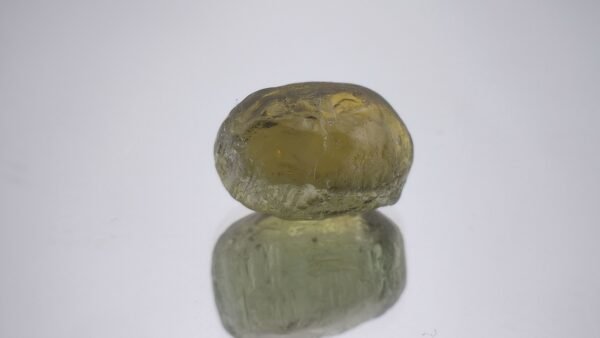
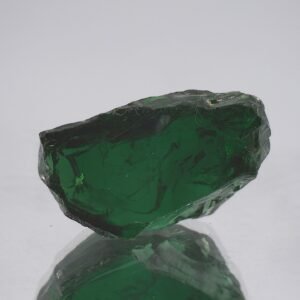
7.31CT Sunset Tourmaline Rough Evaluation
Geological Origins & Rarity
7.31CT Sunset Tourmaline Rough originates from the complex geological processes occurring within granite pegmatites. These aren’t your everyday rocks; they are incredibly coarse-grained igneous formations that form during the late stages of magma crystallization. The presence of boron, along with aluminum, iron, and manganese, is crucial for the development of tourmaline crystals. Specifically, Sunset Tourmaline, with its unique peach and light green hues, gains its color from trace amounts of manganese and iron. The rarity of these precise geochemical conditions is a significant factor in the value of this stone.
Tourmaline formation requires a specific temperature and pressure environment, often found deep within the Earth’s crust. As magma cools, these elements slowly crystallize, and the resulting tourmaline can grow to considerable sizes. The 7.31CT Sunset Tourmaline Rough we’re examining represents a relatively large and well-formed crystal, indicating optimal growth conditions. Pegmatites are often found in regions with significant geological activity, such as Brazil, Nigeria, and Afghanistan, each region producing stones with slightly different characteristics. The specific locality of this particular rough dramatically influences its nuanced coloring and overall quality.
The geological journey of a tourmaline, from its initial formation to its eventual exposure at the surface through erosion, is a testament to the power of natural forces. Finding a rough of this caliber – 7.31CT with such promise – is increasingly difficult, making it a truly special find for any collector or gem cutter. The combination of size, clarity, and color makes this 7.31CT Sunset Tourmaline Rough a coveted piece of Earth’s artistry.
Optical Physics & Color Saturation
The captivating color of the 7.31CT Sunset Tourmaline Rough isn’t just aesthetic; it’s a direct result of its optical physics. Tourmaline, as a complex borosilicate, exhibits strong pleochroism, meaning it displays different colors when viewed from different angles. This is particularly noticeable in Sunset Tourmaline, where the peach and light green tones shift and blend depending on the light source and viewing direction. The presence of iron and manganese ions within the crystal lattice are responsible for absorbing certain wavelengths of light, reflecting back the colors we perceive.
Color saturation in the 7.31CT Sunset Tourmaline Rough is influenced by the concentration and distribution of these coloring agents. A higher, yet balanced, concentration of manganese and iron leads to a more vibrant and desirable hue. The clarity of the rough plays a critical role; fewer inclusions mean more light can travel through the stone, maximizing color intensity. The refractive index of tourmaline is relatively high (typically between 1.614 and 1.666), contributing to its brilliance. This characteristic is crucial for a skilled cutter to unlock the full potential of the 7.31CT Sunset Tourmaline Rough.
Understanding the optical properties of this 7.31CT Sunset Tourmaline Rough is paramount before cutting. The cutter must carefully consider the pleochroism and refractive index to orient the stone in a way that maximizes brilliance and showcases the most desirable color. This involves a detailed analysis of the rough’s internal structure and a strategic approach to faceting. The stone’s unique interplay of light and color, combined with its size, makes the 7.31CT Sunset Tourmaline Rough a truly remarkable specimen.
Master Cutter’s Bench Guide
Approaching the cutter’s bench with a 7.31CT Sunset Tourmaline Rough requires a thoughtful and strategic plan. Unlike some gemstones, tourmaline has a distinct cleavage plane, meaning it can split along specific directions if struck improperly. Therefore, careful mapping of the rough’s internal features and potential cleavage lines is the first critical step. The dimensions of 12.08×9.08×7.92mm offer a substantial canvas for a variety of cuts, but the cutter must prioritize maximizing brilliance and color return.
Given the delicate peach-light green hue of this 7.31CT Sunset Tourmaline Rough, a cut that emphasizes light dispersion is ideal. Oval, pear, and cushion cuts are excellent choices, as they allow for a larger surface area and greater play of color. However, a skilled cutter might also consider a more unconventional cut to highlight the stone’s unique characteristics. The key is to balance symmetry, proportions, and the preservation of weight. Preforming the stone requires precision, as removing too much material can diminish its value. Each angle must be carefully considered to avoid windowing – the loss of light through the pavilion.
Polishing the facets of the 7.31CT Sunset Tourmaline Rough is the final stage, and it demands meticulous attention to detail. Any imperfections or scratches will detract from the stone’s brilliance. The cutter must use progressively finer polishing compounds to achieve a mirror-like finish. The finished gem, born from this 7.31CT Sunset Tourmaline Rough, should be a testament to the cutter’s skill and a celebration of the stone’s natural beauty. The goal is to create a gem that not only meets but exceeds expectations, showcasing the stone’s inherent potential. The 7.31CT Sunset Tourmaline Rough is a challenge, but a rewarding one for any master cutter.
Investment & Yield Potential
Investment-grade colored gemstones are gaining increasing recognition as alternative assets, and the 7.31CT Sunset Tourmaline Rough presents a compelling opportunity for collectors and investors alike. While diamonds often dominate the gemstone market, rare and vibrant tourmalines like this are experiencing a surge in demand. The combination of size, color, and clarity – all present in this 7.31CT Sunset Tourmaline Rough – significantly contributes to its potential value.
The yield potential of this 7.31CT Sunset Tourmaline Rough is dependent on the skill of the cutter, but a well-executed cut could result in a finished gem that commands a premium price. Factors influencing value include the final carat weight, color saturation, clarity, and cut quality. The growing awareness of ethical sourcing and sustainable practices also plays a role; stones with documented origins and responsible mining practices are increasingly sought after. The rarity of Sunset Tourmaline, specifically, drives up its desirability among collectors. A beautifully faceted gem originating from this 7.31CT Sunset Tourmaline Rough could easily appreciate in value over time.
Compared to other investments, colored gemstones offer diversification and a tangible asset. While market fluctuations are always a possibility, rare and high-quality tourmalines have historically demonstrated strong resilience. The 7.31CT Sunset Tourmaline Rough, with its unique characteristics, is not simply a gemstone; it’s a piece of geological history and a potential long-term investment. Proper storage and insurance are essential to protect its value. The allure of this 7.31CT Sunset Tourmaline Rough lies not only in its beauty but also in its potential to provide both aesthetic enjoyment and financial returns.
For a detailed breakdown of this variety, visit the GIA Gem Encyclopedia or explore our Lapidary Guide for professional 7.31CT Sunset Tourmaline Rough cutting tips.
Master Cutter’s Bench Note for 7.31CT Sunset Tourmaline Rough
Due to the potential for cleavage, preform this rough slowly and deliberately, using a diamond-impregnated saw. Monitor the stone closely for any signs of stress.
Technical Specifications
- Weight: 7.31CT
- Dimensions: 12.08×9.08×7.92mm
- Focus Keyword: 7.31CT Sunset Tourmaline Rough
Reviews
There are no reviews yet.