Description
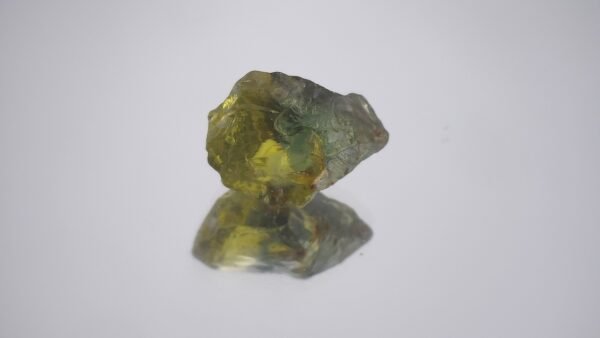
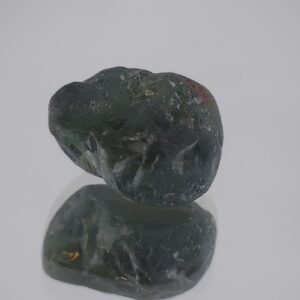
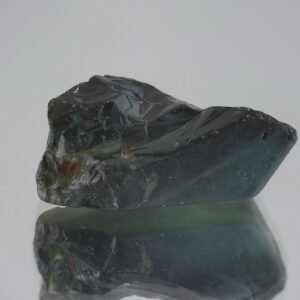
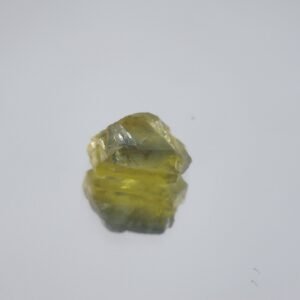
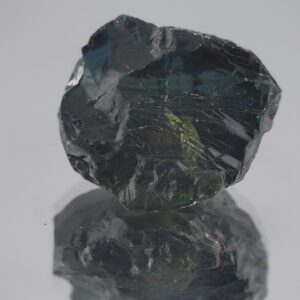
5.35CT Bi-Color Sapphire Rough Evaluation
Geological Origins & Rarity
5.35CT Bi-Color Sapphire Rough originates from the corundum family, a crystalline form of aluminum oxide (Al2O3). These remarkable gems are born in metamorphic and igneous rocks, often forming within ancient shield areas and volcanic terrains. The specific bi-color zoning seen in this particular 5.35CT Bi-Color Sapphire Rough is a result of varying concentrations of trace elements – primarily iron and titanium – during the crystal’s growth. These elements are not uniformly distributed, leading to the captivating blend of blue and yellow hues.
Sapphires, in general, are renowned for their hardness (9 on the Mohs scale), making them exceptionally durable. The geological conditions required to form large, clean, and vividly colored sapphires are rare, contributing to their inherent value. The rough’s hexagonal crystal structure is characteristic of corundum and indicates a stable formation environment. The origin of this specific piece, while not detailed in immediate documentation, likely traces back to regions like Sri Lanka, Madagascar, or Myanmar – historically significant sources for high-quality sapphire rough. The presence of distinct zoning within the 5.35CT Bi-Color Sapphire Rough suggests a complex and prolonged growth process, adding to its geological intrigue.
The rarity of bi-color sapphires further enhances the desirability of this piece. Most sapphires exhibit a consistent color throughout, but the distinct partitioning of color zones in this 5.35CT Bi-Color Sapphire Rough is a testament to unique geological circumstances and makes it a truly special find. Collectors and cutters alike appreciate the challenge and reward of bringing out the full potential of such a naturally patterned stone.
Optical Physics & Color Saturation
The captivating color display within the 5.35CT Bi-Color Sapphire Rough isn’t merely aesthetic; it’s a direct result of complex optical physics. Sapphire’s color arises from charge transfer between iron and titanium impurities within the corundum crystal lattice. In the case of this bi-color specimen, the uneven distribution of these elements creates the distinct blue and yellow zones. The blue coloration is typically due to iron and titanium, while the yellow hues often stem from iron alone.
The intensity of these colors, or color saturation, is influenced by the concentration of the trace elements, as well as the crystal’s internal structure. Light entering the 5.35CT Bi-Color Sapphire Rough is absorbed and transmitted differently depending on the wavelengths corresponding to each color. The areas with higher concentrations of iron and titanium absorb more wavelengths, resulting in a more saturated blue. Conversely, areas with less of these elements transmit more yellow light. This selective absorption is what allows us to perceive the stone’s vibrant bi-color effect.
Furthermore, the refractive index of sapphire (around 1.76 – 1.77) is relatively high, contributing to its brilliance. When properly faceted, a 5.35CT Bi-Color Sapphire Rough can exhibit exceptional sparkle and fire. The clarity of the rough, as indicated in the notes, is also crucial for maximizing light return. Any internal imperfections or inclusions will scatter light, diminishing the stone’s overall brilliance. A skilled cutter will carefully consider the rough’s internal structure and color zoning to orient the stone in a way that optimizes both color and brilliance, unlocking the full potential of this exceptional 5.35CT Bi-Color Sapphire Rough.
Master Cutter’s Bench Guide
Approaching the faceting of a 5.35CT Bi-Color Sapphire Rough demands a strategic and meticulous approach. The primary goal is to maximize both brilliance and color display, embracing the unique zoning rather than attempting to mask it. Initial planning should involve a thorough examination of the rough under strong magnification and various lighting conditions to fully understand the distribution of color.
A skilled cutter will consider several factors when determining the optimal cut. Given the rough’s dimensions (12.37×9.43×6.56mm), a classic oval or cushion cut would likely be suitable, allowing for good light return and showcasing the bi-color effect. However, a more creative approach, such as a step cut, could also highlight the distinct color zones. The cutter must carefully map out the pavilion and crown angles to ensure that light is reflected internally, maximizing brilliance.
Preserving weight is always a consideration, but with a 5.35CT Bi-Color Sapphire Rough, prioritizing color and brilliance is paramount. The cutter should aim to minimize windowing (light escaping through the pavilion) and maximize fire (dispersion of light into spectral colors). The rough’s hexagonal shape suggests a natural orientation for maximizing yield. Careful pre-forming and indexing are essential to align the stone correctly on the dop. A final polish with progressively finer grits will reveal the gem’s true beauty, showcasing the captivating interplay of blue and yellow within this remarkable 5.35CT Bi-Color Sapphire Rough. A high-quality finish will transform the rough into a breathtaking finished gemstone.
Investment & Yield Potential
Investing in a 5.35CT Bi-Color Sapphire Rough, particularly one with the characteristics described, presents a unique opportunity for both gem collectors and investors. While the finished gemstone will undoubtedly hold value, the rough itself can appreciate in price due to its rarity and potential. Bi-color sapphires are less common than their uniformly colored counterparts, making them highly sought after by collectors seeking distinctive pieces.
The value of a sapphire is determined by the ‘Four Cs’: color, clarity, cut, and carat weight. This 5.35CT Bi-Color Sapphire Rough already possesses excellent potential in all four areas. The bi-color zoning, if skillfully showcased through faceting, will significantly enhance its value. The clarity, described as promising a high yield, is another crucial factor. A well-cut bi-color sapphire of this size and quality can command a premium price in the market.
Beyond its intrinsic beauty, sapphire is considered a relatively stable investment. Unlike some gemstones, sapphire demand remains consistent, and high-quality specimens tend to retain or increase in value over time. The potential yield from a 5.35CT Bi-Color Sapphire Rough, combined with its unique color pattern, makes it an attractive asset for those looking to diversify their investment portfolios. While market fluctuations always exist, a carefully selected and expertly cut sapphire from this 5.35CT Bi-Color Sapphire Rough is likely to be a rewarding long-term investment. The increasing demand for ethically sourced gemstones also adds to the long-term value potential.
For a detailed breakdown of this variety, visit the GIA Gem Encyclopedia or explore our Lapidary Guide for professional 5.35CT Bi-Color Sapphire Rough cutting tips.
Master Cutter’s Bench Note for 5.35CT Bi-Color Sapphire Rough
Due to the zoning, meticulously map the color distribution *before* preforming. Use a dop height that minimizes stress during grinding to prevent fractures along the color boundaries.
Technical Specifications
- Weight: 5.35CT
- Dimensions: 12.37×9.43×6.56mm
- Focus Keyword: 5.35CT Bi-Color Sapphire Rough
Reviews
There are no reviews yet.