Description
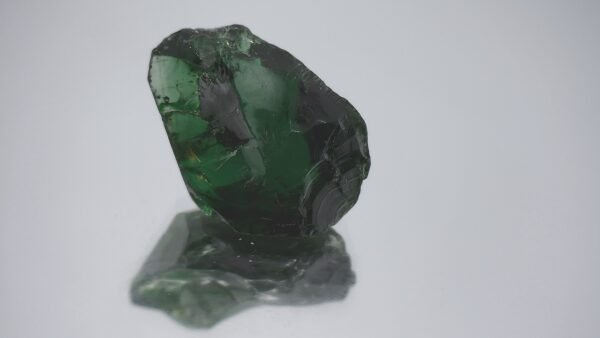
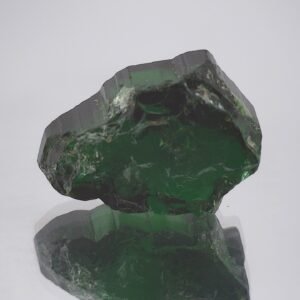
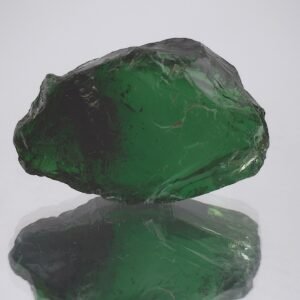
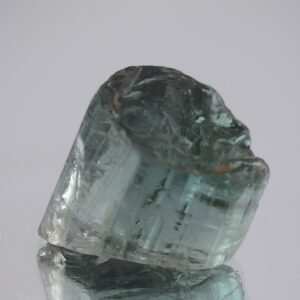
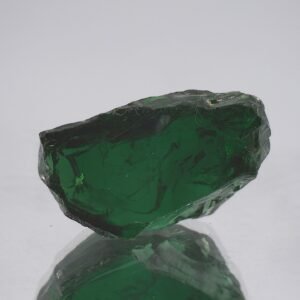
4.87CT Chrome Tourmaline Rough Evaluation
Geological Origins & Rarity
4.87CT Chrome Tourmaline Rough originates from a fascinating and relatively localized geological process, primarily found in specific metamorphic and magmatic environments. The vibrant green color, indicative of ‘chrome’ tourmaline, is due to the presence of vanadium and, crucially, chromium within the crystal structure. Unlike many tourmalines which derive their color from iron, the presence of chromium imparts this exceptionally saturated green. The primary sources for these gems are typically found in Tanzania, Mozambique, and occasionally Pakistan, although high-quality material like this 4.87CT Chrome Tourmaline Rough is becoming increasingly scarce from all locales.
The formation of tourmaline itself requires a unique combination of elements – boron, aluminum, and complex alkali metals – within pegmatitic or hydrothermal fluids. These fluids, rich in dissolved minerals, penetrate fractures and cavities in host rocks, gradually depositing the tourmaline crystals over millions of years. The intense chromium concentration required for this particular color is not universally present in these environments, making Chrome Tourmaline a rarer subset within the tourmaline family. The rough’s origin directly impacts its clarity and potential for brilliance; careful analysis of inclusions and growth patterns is vital for a skilled cutter. This particular 4.87CT Chrome Tourmaline Rough demonstrates a promising clarity for a stone of this type.
Geological surveys indicate a depletion of easily accessible, high-quality Chrome Tourmaline deposits. Mining operations face increasing challenges, both logistically and environmentally, contributing to the rising value of exceptional specimens. The rarity of finding stones of this size and color saturation elevates this 4.87CT Chrome Tourmaline Rough to a truly collectible piece.
Optical Physics & Color Saturation
The optical physics of 4.87CT Chrome Tourmaline Rough are what give it its captivating appearance. Tourmaline, as a group, is known for its strong pleochroism – exhibiting different colors when viewed from different angles. This effect is particularly pronounced in Chrome Tourmaline, where you may observe variations of green, sometimes with hints of bluish or yellowish tones. Understanding this pleochroism is crucial for a cutter when deciding on the optimal cutting angle to maximize color display and minimize undesirable hues.
The color saturation in this 4.87CT Chrome Tourmaline Rough is directly related to the concentration of chromium ions substituting for aluminum within the crystal lattice. Chromium absorbs light across much of the visible spectrum, selectively transmitting green wavelengths. The intensity of this absorption determines the depth and richness of the green color. High-quality Chrome Tourmaline, like this specimen, exhibits a vivid, almost electric green, which is highly sought after by collectors and gem enthusiasts. Refractive index is another critical property; tourmaline generally has a relatively high refractive index (around 1.614-1.666), contributing to its brilliance and sparkle. The specific refractive index will vary slightly depending on the chemical composition and orientation within the crystal.
Dispersion, or ‘fire’, also plays a role in the gem’s visual appeal. Tourmaline has moderate dispersion, meaning it can separate white light into its spectral colors, adding a subtle rainbow effect. A skilled cutter will strategically use dispersion to enhance the gem’s overall brilliance. Assessing the internal reflections within the 4.87CT Chrome Tourmaline Rough is key to predicting its potential fire and ensuring a stunning finished product. The dimensions of the rough, 11.27×10.20×6.58mm, provide vital information for light path calculations during the cutting process.
Master Cutter’s Bench Guide
Approaching the cutter’s bench with a 4.87CT Chrome Tourmaline Rough of this quality demands a meticulous and considered approach. Initial examination should focus on identifying the optimal orientation for maximizing color and minimizing inclusions. Careful study of the rough’s internal features, utilizing magnification and potentially advanced imaging techniques, will reveal the best way to preserve weight while achieving brilliance. Unlike some other gem materials, Chrome Tourmaline can be brittle, making careful handling and precise faceting essential to avoid chipping or fracture.
Pre-forming the 4.87CT Chrome Tourmaline Rough requires patience and skill. A preliminary cut to establish the basic shape should be followed by careful grinding and polishing of the pavilion facets. The cutter must constantly assess the play of light within the stone, adjusting angles to enhance color saturation and minimize windowing (light leakage through the back of the gem). The pleochroism inherent in tourmaline necessitates strategic facet placement to ensure the most desirable color is displayed from the table. This 4.87CT Chrome Tourmaline Rough has the potential for an exceptional yield if cut with precision.
Final polishing should be performed with extreme care, using progressively finer polishing compounds to achieve a mirror-like finish. The cutter’s experience and artistry will ultimately determine the gem’s final beauty and value. A well-cut Chrome Tourmaline will exhibit exceptional brilliance, vibrant color, and a captivating sparkle. Consider a mixed cut, blending brilliant and step cuts to maximize both fire and color distribution. Remember that preserving as much weight as possible while maintaining excellent symmetry and proportions is paramount when working with a valuable rough like this 4.87CT Chrome Tourmaline Rough.
Investment & Yield Potential
Investment-grade colored gemstones, particularly rare varieties like Chrome Tourmaline, are increasingly recognized as valuable additions to a diversified portfolio. The scarcity of high-quality material, coupled with growing demand from collectors and gem enthusiasts, drives the value of exceptional specimens like this 4.87CT Chrome Tourmaline Rough. Unlike diamonds, which are often graded on a standardized scale, colored gemstones are valued based on a combination of factors, including color, clarity, cut, and carat weight.
The potential yield of a 4.87CT Chrome Tourmaline Rough is a key determinant of its investment potential. A skilled cutter can transform this rough into a faceted gem that commands a significantly higher price than the raw material. The intense green color and good clarity of this particular stone suggest a promising return on investment. The market for fine Chrome Tourmaline is robust, with demand consistently exceeding supply. This is especially true for stones of substantial size and exceptional color saturation.
Holding a gem like this 4.87CT Chrome Tourmaline Rough offers a tangible asset that is not subject to the same volatility as many financial markets. As the supply of mineable Chrome Tourmaline diminishes, the value of existing stones is likely to appreciate over time. Consider this a long-term investment with both financial and aesthetic rewards. The rarity and beauty of a well-cut Chrome Tourmaline ensure its enduring appeal to collectors and investors alike. The fact that this is a rough allows the investor to add value through skilled cutting, further enhancing its potential yield.
For a detailed breakdown of this variety, visit the GIA Gem Encyclopedia or explore our Lapidary Guide for professional 4.87CT Chrome Tourmaline Rough cutting tips.
Master Cutter’s Bench Note for 4.87CT Chrome Tourmaline Rough
Due to the potential for cleavage, maintain consistent moisture during the pre-forming stage. Use a diamond-impregnated pin vise for initial shaping to minimize stress.
Technical Specifications
- Weight: 4.87CT
- Dimensions: 11.27×10.20×6.58mm
- Focus Keyword: 4.87CT Chrome Tourmaline Rough
Reviews
There are no reviews yet.