Description
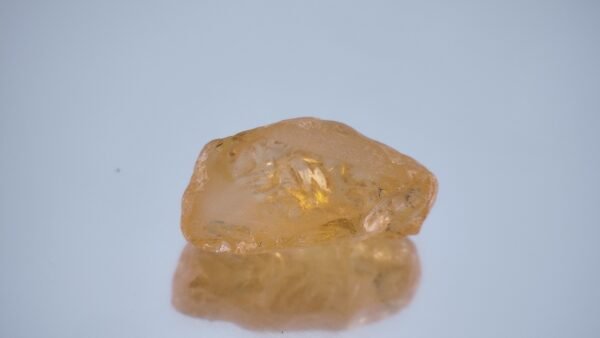
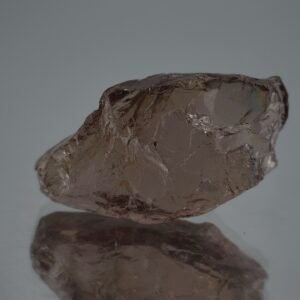
4.36CT Spessartite Garnet Rough Evaluation
Geological Origins & Rarity
4.36CT Spessartite Garnet Rough originates from a fascinating and complex geological history, primarily found in pegmatitic rocks associated with granitic intrusions. These intrusions, rich in lithium, fluorine, and other rare elements, create the perfect environment for the formation of Spessartite. Unlike some garnets formed through metamorphic processes, Spessartite typically crystallizes directly from these late-stage magmatic fluids. The most significant deposits are found in countries like Namibia, Mozambique, Nigeria, and Sri Lanka, each imparting subtle nuances to the stone’s characteristics. The vibrant Mandarin orange color, highly sought after in specimens like this 4.36CT Spessartite Garnet Rough, is due to the presence of manganese, which substitutes for iron in the garnet’s crystal structure.
Rarity plays a significant role in the value of Spessartite. While garnets as a family are relatively common, truly gem-quality Spessartite, especially in larger sizes and intense color saturation, is quite scarce. The specific geological conditions needed for its formation – the right magma composition, the presence of manganese, and a stable environment for crystal growth – don’t occur frequently. This 4.36CT Spessartite Garnet Rough represents a find that offers a cutter the chance to work with a stone that isn’t readily available on the market, making it particularly desirable for collectors and those seeking unique jewelry pieces.
The formation process often involves hydrothermal activity, where hot, aqueous fluids circulate through the pegmatite, dissolving and redepositing minerals. This can lead to the development of well-formed crystals, as seen in the desirable tabular habit of this particular rough. Understanding the geological origins of a gemstone helps appreciate not only its beauty but also the remarkable natural forces that brought it into existence.
Optical Physics & Color Saturation
The optical physics of 4.36CT Spessartite Garnet Rough are what ultimately translate into its breathtaking brilliance and fire. Belonging to the isometric crystal system, Spessartite Garnet exhibits double refraction, though it’s typically weak and not readily noticeable to the naked eye. Its refractive index (RI) ranges from 1.796 to 1.805, giving it a good degree of light return. This means that a well-cut Spessartite will exhibit significant sparkle. The dispersion, or fire, is moderate at 0.044, contributing to flashes of color as light passes through the gem.
Color saturation in 4.36CT Spessartite Garnet Rough is a crucial factor in determining its value. The most desirable color is a vibrant, pure Mandarin orange, as exhibited by this specimen. This intense hue is directly related to the concentration of manganese within the crystal lattice. A higher concentration generally leads to a more saturated color. However, it’s not simply about the amount of manganese; the specific crystal environment and the presence of other trace elements can also influence the final color. A stone with even color distribution, free from color zoning, is highly prized.
The clarity of this 4.36CT Spessartite Garnet Rough is also key to maximizing its optical performance. While some inclusions are common and can even serve as a “fingerprint” of the stone’s natural origin, excessive inclusions can impede light transmission and diminish brilliance. The potential for a final gem with excellent clarity, coupled with the vibrant color and good RI, makes this rough a truly exceptional piece. When considering faceting, understanding how light interacts with the stone is paramount to unlocking its full potential.
Master Cutter’s Bench Guide
Approaching the master cutter’s bench with a 4.36CT Spessartite Garnet Rough like this requires careful planning and execution. Given the dimensions of 12.53×6.5×6.22mm and its tabular crystal habit, a brilliant cut – perhaps a modified round or oval – is likely to maximize brilliance and yield. However, the cutter should first carefully study the rough to identify any internal inclusions or color zoning that might influence the cutting plan. Preforming the stone to remove excess material and establish the basic outline is the first step.
Maintaining symmetry is critical. Spessartite Garnet, while durable (Mohs hardness of 7-7.5), can be brittle if subjected to uneven pressure during faceting. Precise angles and polished facets are essential not only for beauty but also for structural integrity. The cutter must balance maximizing carat weight with preserving the vibrant color and brilliance. A shallower cut can enhance fire, while a deeper cut can improve brilliance, but both come with trade-offs. The goal is to find the optimal balance for this particular 4.36CT Spessartite Garnet Rough.
The final polish is where the stone truly comes alive. Using progressively finer polishing compounds, the cutter must achieve a flawless, mirror-like finish on each facet. This process requires patience, skill, and a keen eye for detail. A well-cut and polished Spessartite Garnet, originating from a quality 4.36CT Spessartite Garnet Rough, will exhibit exceptional sparkle, fire, and a captivating Mandarin orange hue. Careful consideration of the rough’s characteristics and a skilled hand are essential to unlocking its full potential. A cutter should always prioritize preserving the stone’s natural beauty while enhancing its brilliance and fire.
Investment & Yield Potential
Investing in a 4.36CT Spessartite Garnet Rough presents a unique opportunity in the colored gemstone market. While not as widely known as diamonds, rubies, or sapphires, Spessartite Garnet is gaining recognition among collectors and jewelry enthusiasts for its exceptional beauty and increasing rarity. Fine-quality Spessartite, particularly in larger sizes and vibrant colors, commands a premium price per carat. The demand for ethically sourced and unique gemstones is also driving up values.
The yield potential of this 4.36CT Spessartite Garnet Rough is significant. A skilled cutter can expect to produce a faceted gem that retains a substantial percentage of the original carat weight, especially considering the stone’s clarity and well-defined crystal structure. This finished gem can then be sold to jewelers, collectors, or directly to consumers. The increasing popularity of Mandarin Garnet in high-end jewelry designs further enhances its investment potential. Compared to some other gemstones, Spessartite often offers a more accessible entry point for investors seeking to diversify their portfolios.
However, it’s important to remember that gemstone investment carries inherent risks. Market fluctuations, changes in consumer preferences, and the availability of new sources can all impact value. But, for those with a long-term perspective and an appreciation for the beauty of rare gemstones, a 4.36CT Spessartite Garnet Rough like this can be a rewarding investment. The combination of rarity, beauty, and growing demand makes it a promising addition to any gemstone collection, especially if expertly cut and presented.
For a detailed breakdown of this variety, visit the GIA Gem Encyclopedia or explore our Lapidary Guide for professional 4.36CT Spessartite Garnet Rough cutting tips.
Master Cutter’s Bench Note for 4.36CT Spessartite Garnet Rough
Due to the tabular shape, pre-forming with a slightly angled lapidary saw is crucial to avoid windowing during the final bruting stage. Prioritize maintaining table size for maximum brilliance.
Technical Specifications
- Weight: 4.36CT
- Dimensions: 12.53×6.5×6.22mm
- Focus Keyword: 4.36CT Spessartite Garnet Rough
Reviews
There are no reviews yet.