Description
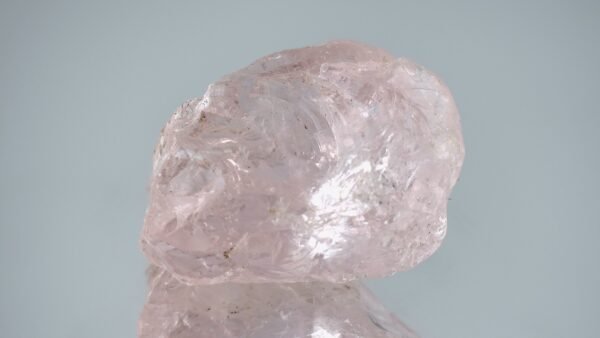
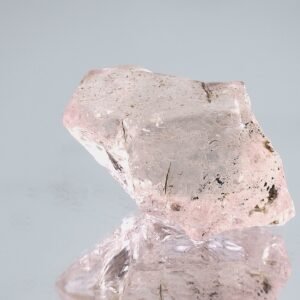
36.03CT Morganite Rough Evaluation
Geological Origins & Rarity
36.03CT Morganite Rough originates from the Beryl family, a group known for its hexagonal crystal system and chemical composition of beryllium aluminum cyclosilicate. Morganite, specifically, is a pink to peach variety of beryl, colored by trace amounts of manganese. Unlike its more famous cousins like emerald (colored by chromium) and aquamarine (colored by iron), Morganite’s delicate hue is a result of a different, yet equally fascinating, geological process.
Most Morganite rough is found in pegmatites – coarse-grained igneous rocks formed during the late stages of magma crystallization. These pegmatites often contain pockets and cavities where large, well-formed crystals can grow. Significant deposits of Morganite are found in Brazil, Madagascar, Pakistan, and Mozambique. The specific geological conditions – the presence of beryllium, aluminum, manganese, and the right temperature and pressure – are crucial for Morganite formation. The rarity of these combined factors contributes to the value of fine Morganite specimens.
The 36.03CT Morganite Rough we’re examining likely formed deep within the Earth’s crust, subjected to hydrothermal activity that brought the necessary elements together. The intensity of the pink color is directly related to the concentration of manganese present during the crystal’s growth. A higher concentration generally results in a more saturated, desirable color. The clarity of the rough also indicates a stable geological environment with minimal inclusions or fractures during formation. This particular stone’s quality suggests a prime origin and excellent potential for a stunning finished gem.
Understanding the geological origins of a 36.03CT Morganite Rough provides insight into its inherent qualities and helps appreciate the natural forces that created this beautiful gemstone. The careful extraction of this rough from its host rock is the first step in revealing its inner brilliance.
Optical Physics & Color Saturation
The optical physics of Morganite are fascinating, contributing to its characteristic brilliance and delicate color play. As a member of the Beryl family, Morganite exhibits a refractive index of 1.565 – 1.577, which is responsible for the way light bends as it enters the stone. This refractive index is moderate, lending to a bright, but not overly flashy, appearance. The 36.03CT Morganite Rough, when properly faceted, can exhibit excellent sparkle and fire.
Color saturation in Morganite is primarily determined by the concentration of manganese, as mentioned previously. However, the way light interacts with the manganese ions is also crucial. The manganese absorbs certain wavelengths of light, resulting in the pink to peach hues we see. The intensity and shade of the color can also be affected by the presence of other trace elements, and even by the stone’s internal structure. A well-cut Morganite maximizes light return, enhancing the perceived color saturation.
Morganite is also pleochroic, meaning it displays different colors when viewed from different angles. This effect is subtle in Morganite, but can be observed by a skilled gemologist. Furthermore, the stone exhibits a moderate dispersion (0.009), which contributes to its fire – the flashes of spectral color seen when light is refracted. The 36.03CT Morganite Rough’s potential for vibrant color is directly linked to the interplay of these optical properties.
The dimensions of this particular rough – 21.68×17.3×13.07mm – are significant because they influence how light will travel through the finished gem. A skilled cutter will carefully consider these dimensions, along with the stone’s internal characteristics, to maximize brilliance and color. A deeper cut can enhance fire, while a shallower cut can maximize brilliance. Ultimately, understanding the physics of light interaction is essential for unlocking the full beauty of the 36.03CT Morganite Rough.
Master Cutter’s Bench Guide
Approaching the master cutter’s bench with a 36.03CT Morganite Rough requires a strategic mindset and a deep understanding of gemological principles. The initial assessment is paramount: carefully examine the rough for inclusions, fractures, and color zoning. This will dictate the optimal cutting plan. Morganite, while relatively hard (7.5-8 on the Mohs scale), can be brittle, so a cautious approach is essential.
For a stone of this size, a variety of cuts could be considered – oval, round, pear, cushion, or even a more creative, custom design. The choice depends on maximizing yield, preserving color, and enhancing brilliance. Given the dimensions of 21.68×17.3×13.07mm, a cushion cut would likely yield a substantial and visually appealing gem. However, the cutter must also account for any natural color zoning; orienting the cut to showcase the most saturated color is vital. Preforming the stone is best done with a diamond-impregnated saw, carefully following the planned outline.
The faceting process itself requires precision and patience. Morganite is best faceted with diamond laps, and a light touch is crucial to avoid chipping or scratching the surface. The angles of each facet must be meticulously calculated and executed to ensure optimal light return. Pay particular attention to the pavilion angles – too shallow, and the stone will appear glassy; too steep, and it will lose brilliance. Regular inspection under magnification is essential to monitor progress and identify any potential issues.
Polishing the finished gem is the final step in revealing its full beauty. A final polish with diamond paste will bring out the luster and brilliance of the 36.03CT Morganite Rough, transforming it into a breathtaking gem. A well-cut Morganite, crafted from this rough, will not only be visually stunning but also a testament to the skill and artistry of the cutter. This 36.03CT Morganite Rough deserves a cut that highlights its inherent elegance and maximizes its potential.
Investment & Yield Potential
Investing in colored gemstones, like a 36.03CT Morganite Rough, requires careful consideration of market trends, rarity, and potential yield. While diamonds historically dominate the gem market, Morganite has experienced a surge in popularity in recent years, driven by its delicate beauty and increasing demand for pastel-colored gemstones. This increased demand has, in turn, driven up prices for high-quality Morganite.
The value of a faceted Morganite is determined by several factors: carat weight, color, clarity, cut, and overall brilliance. A well-cut, vibrant, and clear Morganite of significant size – like the potential yield from this 36.03CT Morganite Rough – can command a premium price. The rarity of large, clean Morganite rough also contributes to its investment potential. While not as rare as some other gemstones, fine-quality Morganite is becoming increasingly scarce.
Compared to other investments, colored gemstones offer diversification and potential for long-term appreciation. However, it’s crucial to understand that the gem market can be volatile, and prices can fluctuate. Investing in a rough stone, like this 36.03CT Morganite Rough, adds another layer of complexity. The yield from faceting is not guaranteed, and the quality of the finished gem will depend on the skill of the cutter. However, a successful cut can significantly increase the stone’s value.
Ultimately, a 36.03CT Morganite Rough can be a rewarding investment for discerning collectors and gem enthusiasts. Its inherent beauty, combined with its potential for appreciation, makes it a valuable addition to any portfolio. However, it’s important to conduct thorough research, consult with gemological experts, and understand the risks involved before making a purchase. The potential return on investment, coupled with the joy of owning a stunning gemstone, makes this rough a compelling opportunity.
For a detailed breakdown of this variety, visit the GIA Gem Encyclopedia or explore our Lapidary Guide for professional 36.03CT Morganite Rough cutting tips.
Master Cutter’s Bench Note for 36.03CT Morganite Rough
When preforming this Morganite rough, utilize a slightly angled saw blade to follow any natural color zoning. This will allow you to preserve the most saturated color in the finished gem.
Technical Specifications
- Weight: 36.03CT
- Dimensions: 21.68×17.3×13.07mm
- Focus Keyword: 36.03CT Morganite Rough
Reviews
There are no reviews yet.