Description
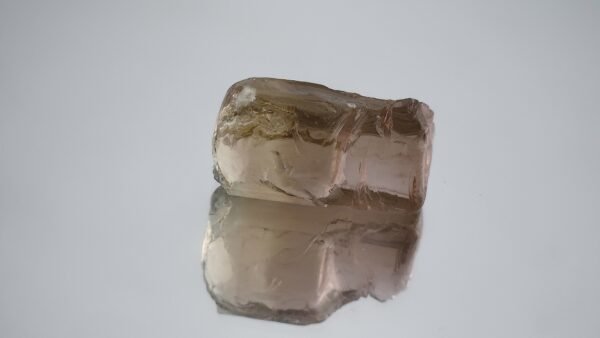
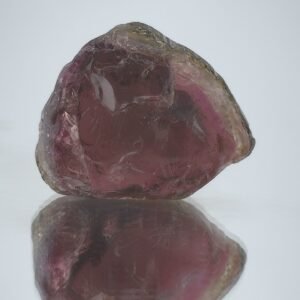
21.14CT Bi-Color Tourmaline Rough Evaluation
Geological Origins & Rarity
21.14CT Bi-Color Tourmaline Rough originates from the complex geological processes occurring deep within the Earth’s crust. Tourmalines, in general, are formed within pegmatites, which are late-stage igneous rocks that cool slowly, allowing for the formation of large, well-formed crystals. These pegmatites are often rich in volatile elements like boron, fluorine, and lithium – essential ingredients for tourmaline growth. The bi-coloration in this specific piece is a result of variations in elemental composition during crystallization. Different growth sectors within the crystal experienced varying concentrations of elements like iron and manganese, leading to the distinct pink and pale yellow zoning. This particular specimen likely formed in a granitic pegmatite environment, where the slow cooling and fluid-rich conditions facilitated the creation of a substantial, high-quality crystal.
The rarity of bi-color tourmalines, especially those with well-defined color zoning like this 21.14CT Bi-Color Tourmaline Rough, stems from the precise conditions required for their formation. It’s not merely the presence of the necessary elements, but the specific temperature, pressure, and chemical environment that dictates the development of the dual-color effect. Finding a rough of this size and clarity, exhibiting such a pronounced and aesthetically pleasing bi-coloration, is a truly exceptional event. The source location, while often a closely guarded secret by miners, further contributes to its uniqueness, as different regions yield tourmalines with varying characteristics.
Understanding the geological origins is paramount for appreciating the inherent value of this 21.14CT Bi-Color Tourmaline Rough. It’s a testament to millions of years of geological activity and a rare occurrence of ideal conditions converging to create a gemstone of remarkable beauty and potential.
Optical Physics & Color Saturation
The optical physics governing the appearance of the 21.14CT Bi-Color Tourmaline Rough are fascinating. Tourmaline, as a complex borosilicate, exhibits strong pleochroism – meaning it displays different colors when viewed from different angles. This is particularly noticeable in bi-color stones, where the color change is inherent to the crystal structure itself. The pink hue is likely due to the presence of manganese ions, while the pale yellow is often linked to iron. These ions absorb certain wavelengths of light, resulting in the colors we perceive. The intensity of the color saturation in the 21.14CT Bi-Color Tourmaline Rough is influenced by the concentration and distribution of these color-causing elements.
Furthermore, tourmaline possesses a high refractive index, contributing to its brilliance and sparkle. This means light bends significantly as it enters the crystal, creating internal reflections that enhance its visual appeal. The clarity of this rough is critical in maximizing light return; any inclusions or cloudiness would impede the passage of light and diminish its brilliance. The specific gravity of tourmaline also plays a role in how it interacts with light, influencing its overall appearance. The cut will dramatically impact how light is refracted and reflected within the 21.14CT Bi-Color Tourmaline Rough, therefore understanding these properties is essential for maximizing its potential.
The bi-color effect isn’t simply a surface phenomenon; it’s a fundamental property of the crystal’s internal structure. When expertly cut, the facets can be strategically oriented to accentuate the color zoning and create a stunning display of color play. The 21.14CT Bi-Color Tourmaline Rough’s inherent optical properties, coupled with skilled faceting, can result in a gemstone of exceptional fire and brilliance.
Master Cutter’s Bench Guide
Approaching the master cutter’s bench with a 21.14CT Bi-Color Tourmaline Rough like this requires a deep understanding of both gemological principles and artistic vision. The initial step is careful pre-forming, assessing the crystal’s structure and identifying the optimal cutting direction to maximize yield and minimize waste. Given the dimensions of 20.58×13.24×9.71mm, the cutter must consider various cutting styles, such as oval, pear, or cushion, to best showcase the bi-color zoning. A crucial decision involves orienting the stone so the contrasting colors are displayed prominently, creating a visually striking effect.
The faceting process itself demands precision and patience. Each facet must be angled and polished with meticulous care to ensure optimal light return and brilliance. The cutter will need to account for the pleochroism of the tourmaline, orienting facets to enhance the desired colors and minimize any undesirable hues. The clarity of the 21.14CT Bi-Color Tourmaline Rough allows for a relatively shallow cut, maximizing the stone’s size and brilliance. However, maintaining symmetry and proportion is paramount to prevent light leakage and ensure a balanced appearance.
This 21.14CT Bi-Color Tourmaline Rough isn’t simply about maximizing carat weight; it’s about creating a gemstone that embodies artistry and showcases the natural beauty of the material. The cutter must be able to visualize the finished gem and execute their vision with skill and precision, transforming a rough crystal into a captivating work of art. The potential for this stone is immense, and a thoughtful cut will unlock its full potential.
Investment & Yield Potential
The investment potential of a 21.14CT Bi-Color Tourmaline Rough, particularly one of this quality, is significant and growing. Colored gemstones, especially rare varieties like bi-color tourmalines, are increasingly sought after by collectors and investors alike. Unlike diamonds, which are subject to standardized grading and pricing, colored gemstones are valued based on a combination of factors, including color, clarity, cut, carat weight, and rarity. The unique bi-coloration of this 21.14CT Bi-Color Tourmaline Rough immediately sets it apart, enhancing its desirability.
The demand for high-quality tourmalines has been steadily increasing in recent years, driven by a growing appreciation for their vibrant colors and unique characteristics. A well-cut gem, derived from this 21.14CT Bi-Color Tourmaline Rough, could command a substantial price in the market, far exceeding the cost of the rough material. The investment yield is not only dependent on the finished gem’s beauty but also on the skill of the cutter and the market demand at the time of sale. Collectors often prioritize stones with exceptional color zoning and clarity, making this rough a particularly attractive investment opportunity.
Furthermore, the limited supply of high-quality bi-color tourmalines ensures that their value will likely continue to appreciate over time. Owning a 21.14CT Bi-Color Tourmaline Rough represents not only a financial investment but also an investment in a piece of natural artistry. It’s a tangible asset with intrinsic beauty and enduring value, appealing to both seasoned collectors and those new to the world of fine gemstones.
For a detailed breakdown of this variety, visit the GIA Gem Encyclopedia or explore our Lapidary Guide for professional 21.14CT Bi-Color Tourmaline Rough cutting tips.
Master Cutter’s Bench Note for 21.14CT Bi-Color Tourmaline Rough
Due to the potential for internal stress within the rough, a slow and steady lapidary approach is crucial. Use a consistent, light pressure to avoid fracturing the crystal during pre-forming.
Technical Specifications
- Weight: 21.14CT
- Dimensions: 20.58×13.24×9.71mm
- Focus Keyword: 21.14CT Bi-Color Tourmaline Rough
Reviews
There are no reviews yet.