Description
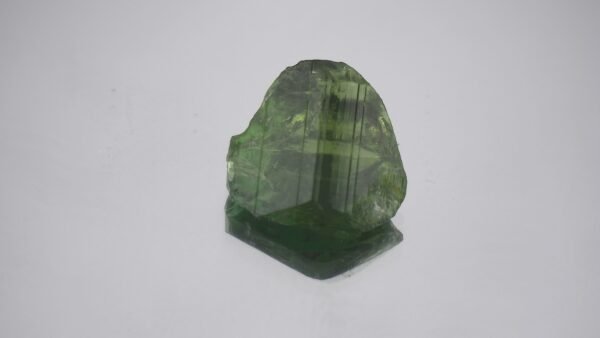
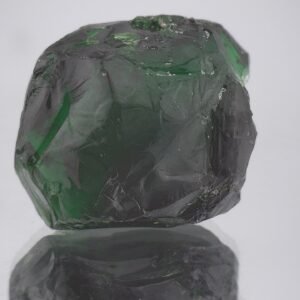
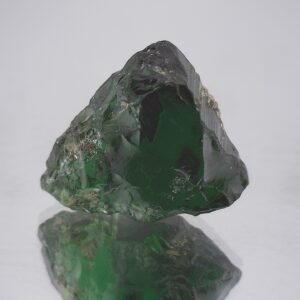
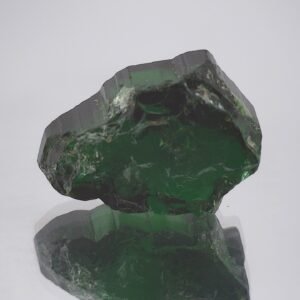
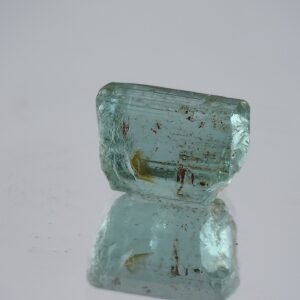
2.88CT Chrome Tourmaline Rough Evaluation
Geological Origins & Rarity
2.88CT Chrome Tourmaline Rough originates from a fascinating confluence of geological processes, primarily found in the pegmatitic granites of Brazil, Nigeria, and Tanzania. These vibrant green tourmalines owe their color to trace amounts of chromium, hence the “Chrome” designation. The formation requires specific conditions: a beryllium-rich magma interacting with chromium-bearing minerals during the late stages of crystallization. This isn’t a common occurrence, which is a significant factor in the stone’s relative rarity. Unlike some tourmalines formed in metamorphic environments, Chrome Tourmaline often forms in larger, more well-defined crystals within the pegmatite.
The geological setting plays a huge role in the quality of the rough. Stones sourced from certain regions, like those in Mozambique, are known for producing particularly vivid and saturated colors. The presence of other trace elements, alongside chromium, can subtly influence the final hue. Understanding the geological origin of a 2.88CT Chrome Tourmaline Rough provides valuable insight into its potential characteristics. These stones are not simply ‘green’; they represent a complex geological history. The scarcity of these conditions contributes directly to the desirability and value of fine specimens.
Furthermore, the rough material often exhibits distinctive inclusions – not necessarily flaws, but rather “fingerprints” of its formation. These can be gas bubbles, liquid-filled cavities, or even tiny mineral crystals. Skilled cutters learn to work *with* these inclusions, sometimes even incorporating them into the finished gem to enhance its character. The 2.88CT Chrome Tourmaline Rough available is a testament to these natural forces, a piece of Earth’s history waiting to be unveiled.
Optical Physics & Color Saturation
The captivating color of a 2.88CT Chrome Tourmaline Rough isn’t just about the presence of chromium; it’s about the interplay of light and the stone’s optical properties. Tourmaline, as a group, is known for its strong pleochroism – the ability to display different colors when viewed from different angles. Chrome Tourmaline takes this to an extreme, exhibiting a pronounced trichroism, meaning it displays *three* distinct colors. Typically, these are vibrant green, yellowish-green, and a darker, more muted green. This trichroism is a direct result of the chromium ions absorbing certain wavelengths of light while transmitting others.
The saturation of the green color is dependent on the concentration of chromium, but also on the stone’s refractive index and dispersion. Tourmaline has a relatively high refractive index (typically between 1.614 and 1.666), which contributes to its brilliance and sparkle. Dispersion, or “fire,” refers to the stone’s ability to separate white light into its spectral colors. A well-cut 2.88CT Chrome Tourmaline Rough, maximizing light return, will display exceptional fire. The arrangement of atoms within the crystal lattice also affects these optical properties, leading to variations even within the same deposit.
Understanding these physics is crucial for a cutter. The orientation of the rough relative to the crystal axes dictates how the trichroism will be expressed in the finished gem. A skilled cutter will strategically orient the stone to maximize the desired color, often favoring the most intense and vibrant green. The 2.88CT Chrome Tourmaline Rough, with its potential for vivid color and brilliance, demands a nuanced understanding of these optical principles to unlock its full beauty.
Master Cutter’s Bench Guide
Approaching a 2.88CT Chrome Tourmaline Rough on the master cutter’s bench demands a careful and considered strategy. Unlike some gemstones, Chrome Tourmaline’s trichroism necessitates a precise orientation to maximize the desired color display. Initial assessment should focus on identifying the dominant color axis and planning the cut to emphasize that hue. The 9.73×9.44×6.04mm dimensions of this particular rough suggest a potential for a variety of cuts, from classic emerald cuts to more modern radiant or trillion shapes, but the final choice must be informed by the stone’s internal characteristics.
Careful mapping of inclusions is essential. While inclusions can sometimes be minimized or worked around, attempting to remove them aggressively from a 2.88CT Chrome Tourmaline Rough can lead to fractures and significant weight loss. Instead, a skilled cutter will incorporate them strategically, perhaps positioning them away from the table or using them to create a unique pattern. The polishing process is equally critical. Chrome Tourmaline can exhibit surface diffusion, where color appears concentrated on the surface. Achieving a flawless polish is vital to reveal the true depth and brilliance of the stone.
The cutter must also be mindful of the stone’s tendency to cleave in certain directions. Careful pre-forming and strategic bruting are necessary to avoid unwanted fractures during faceting. A well-cut 2.88CT Chrome Tourmaline Rough should exhibit exceptional symmetry, proportions, and polish, allowing light to travel freely through the stone and maximizing its scintillation and fire. It’s a process that requires patience, precision, and a deep understanding of the material. The final result will be a gem that showcases the natural beauty and rarity of this exceptional stone.
Investment & Yield Potential
Investing in a 2.88CT Chrome Tourmaline Rough, while requiring the additional step of cutting, can yield significant returns for both collectors and investors. Fine-quality Chrome Tourmaline, particularly stones with vibrant, saturated color and good clarity, are increasingly rare and in high demand. The scarcity of suitable rough material, combined with the growing popularity of colored gemstones, drives up prices over time. A skillfully cut gem from a 2.88CT Chrome Tourmaline Rough can command a premium in the market.
The investment potential is further enhanced by the fact that Chrome Tourmaline is often used in high-end jewelry designs. Pieces featuring this stone are highly sought after by collectors and connoisseurs, contributing to its long-term value. While the cost of cutting must be factored in, a well-executed cut can significantly increase the stone’s worth. The key is to maximize brilliance, color saturation, and overall aesthetic appeal. Comparing the price of rough to finished gems of comparable size and quality provides a clear indication of the potential profit margin.
Furthermore, the unique characteristics of each 2.88CT Chrome Tourmaline Rough – its inclusions, color zoning, and individual brilliance – contribute to its collectibility. Collectors often seek out stones with distinctive features, making them even more valuable. As with any gemstone investment, it’s crucial to acquire stones from reputable sources and to have them independently appraised. The 2.88CT Chrome Tourmaline Rough represents not just a financial investment, but an investment in a piece of natural beauty and geological history.
For a detailed breakdown of this variety, visit the GIA Gem Encyclopedia or explore our Lapidary Guide for professional 2.88CT Chrome Tourmaline Rough cutting tips.
Master Cutter’s Bench Note for 2.88CT Chrome Tourmaline Rough
When pre-forming, use a slow speed and diamond-impregnated wheel to minimize chipping along cleavage planes. Constant lubrication is vital.
Technical Specifications
- Weight: 2.88CT
- Dimensions: 9.73×9.44×6.04mm
- Focus Keyword: 2.88CT Chrome Tourmaline Rough
Reviews
There are no reviews yet.