Description
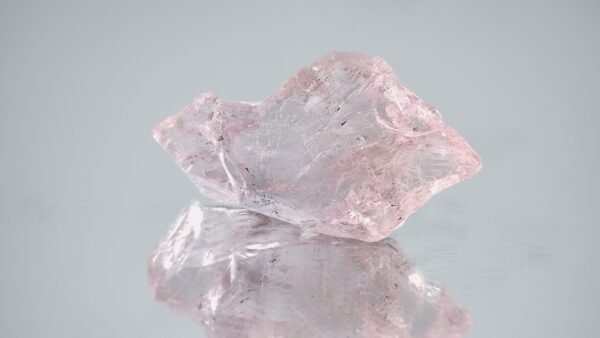
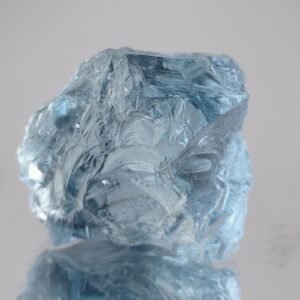
48.05CT Morganite Rough Evaluation
Geological Origins & Rarity
48.05CT Morganite Rough represents a fascinating intersection of geological processes and the beauty of the beryl family. Morganite itself is a pink to peach-colored variety of beryl, chemically identical to emerald and aquamarine, but colored by traces of manganese and, sometimes, iron. Unlike its more famous siblings, Morganite formation requires specific geological conditions. It typically forms in lithium-rich pegmatites, igneous rocks formed from the slow cooling of magma, and less commonly, in metamorphic rocks. These pegmatites, often found in granitic areas, are the result of late-stage magmatic differentiation, concentrating rare elements like lithium, beryllium, and manganese.
The rarity of a substantial piece of 48.05CT Morganite Rough stems from several factors. Firstly, the necessary combination of elements – beryllium, lithium, and manganese – isn’t frequently found in sufficient concentrations. Secondly, the geological processes needed to form these pegmatites are relatively uncommon. Finally, even when these conditions *are* met, finding a rough piece of this size, with the potential for a significant, high-quality cut gemstone, is exceptionally rare. Most morganite rough is heavily included or displays weak color. The origin of this particular piece is crucial; while Morganite deposits are found in Brazil, Madagascar, Mozambique, Pakistan, and the USA (Maine and California), the quality and color intensity can vary drastically based on the location. A 48.05CT Morganite Rough of good clarity and color demands careful sourcing and geological understanding.
The geological environment also influences the presence of inclusions. Common inclusions in Morganite rough include liquid-filled cavities and needle-like crystals of other minerals. These inclusions, while sometimes detracting from clarity, can also serve as ‘fingerprints,’ helping gemologists trace the stone’s origin and authenticity. Understanding the geological history of a 48.05CT Morganite Rough is therefore fundamental to appreciating its value and potential.
Optical Physics & Color Saturation
The optical physics of 48.05CT Morganite Rough are what give it its captivating beauty. As a member of the beryl family, Morganite exhibits a hexagonal crystal system and a refractive index typically ranging from 1.56 to 1.59. This refractive index is lower than that of diamond, but still contributes to the stone’s brilliance. However, the true magic lies in its pleochroism, the ability to display different colors when viewed from different angles. Morganite typically exhibits pale pink, violet-pink, and a more muted yellowish-pink. The intensity of these colors and the dominant hue are crucial factors determining the value of the 48.05CT Morganite Rough.
Color saturation in a 48.05CT Morganite Rough is directly related to the concentration of manganese. Higher manganese content generally results in a more intense pink color. Iron can also contribute to the color, but often leads to a more peachy or orange hue. The interplay between these trace elements is complex and dictates the final color appearance. The rough’s ability to transmit light – its transparency – is also critical. Highly transparent rough allows light to travel through the stone unimpeded, maximizing brilliance and color display. Any inclusions or cloudiness within the 48.05CT Morganite Rough will scatter light, reducing both transparency and saturation.
Furthermore, the phenomenon of dichroism plays a vital role. When examining the 48.05CT Morganite Rough, a skilled gemologist will rotate the stone to observe the color changes. This helps assess the color’s strength and consistency, and informs the optimal cutting direction to maximize the desired hue. Understanding these optical properties is essential for unlocking the full potential of this beautiful gemstone. The rough’s specific gravity (around 2.78-2.80) also impacts how light interacts within the stone, influencing its overall appearance.
Master Cutter’s Bench Guide
Approaching a 48.05CT Morganite Rough on the master cutter’s bench demands a thoughtful and strategic approach. Unlike some gemstones, Morganite is reasonably hard (7.5-8 on the Mohs scale), but can exhibit distinct cleavage planes, meaning it can fracture along specific crystallographic directions. Therefore, a thorough examination of the rough is paramount before even considering the first cut. This includes carefully assessing the color distribution, identifying any inclusions, and mapping the rough’s internal structure.
The cutter’s primary goal with a 48.05CT Morganite Rough is to maximize both brilliance and color. Given Morganite’s pleochroism, the orientation of the cut is critical. The cutter must strategically align the stone to emphasize the most desirable color and minimize any less appealing hues. Oval and cushion cuts are popular choices for Morganite, as they allow for good light return and showcase the stone’s inherent color. However, more creative cuts are also possible, depending on the rough’s shape and internal characteristics. A deep cut can enhance color saturation, while a shallower cut can maximize brilliance, but both require precise angles and polishing.
Polishing a 48.05CT Morganite Rough requires patience and skill. Using progressively finer polishing laps and compounds, the cutter meticulously removes any surface imperfections, revealing the stone’s inherent luster. Any remaining inclusions need to be carefully considered; some may be minimized by strategic polishing, while others may necessitate creative faceting to avoid compromising the stone’s structural integrity. The final step involves ensuring the cut is symmetrical and the facets are aligned, resulting in a gemstone that is both beautiful and durable. A well-cut 48.05CT Morganite Rough will capture and reflect light beautifully, showcasing its delicate pink hue to its fullest potential.
Investment & Yield Potential
Investing in a 48.05CT Morganite Rough, particularly a piece of this size and potential, represents a unique opportunity within the colored gemstone market. While diamonds remain the dominant force, the demand for colored gemstones, including Morganite, has been steadily increasing in recent years. This is driven by a growing consumer desire for unique and ethically sourced jewelry. Morganite, with its romantic pink hue, is particularly popular for engagement rings and fashion jewelry.
The yield potential of a 48.05CT Morganite Rough is dependent on several factors, including the quality of the rough, the skill of the cutter, and the final cut. A well-cut gemstone, free of significant inclusions and displaying a vibrant pink color, can command a premium price. While the market price for cut Morganite varies based on size, color, and clarity, a significant, high-quality stone originating from a 48.05CT Morganite Rough has the potential to appreciate in value over time. It’s important to consider that rough gemstone investment carries inherent risks, including the possibility of low yield or damage during cutting.
Compared to other beryls like emerald or aquamarine, Morganite is often more affordable, making it an attractive option for investors seeking diversification. However, the supply of high-quality Morganite rough remains limited, especially pieces exceeding 48.05CT. This scarcity contributes to its potential for long-term appreciation. Furthermore, the growing trend towards sustainable and ethical gemstone sourcing adds value to Morganite, as many deposits are mined responsibly. Therefore, a carefully selected 48.05CT Morganite Rough can be a valuable addition to a gemstone portfolio, offering both aesthetic beauty and potential financial return.
For a detailed breakdown of this variety, visit the GIA Gem Encyclopedia or explore our Lapidary Guide for professional 48.05CT Morganite Rough cutting tips.
Master Cutter’s Bench Note for 48.05CT Morganite Rough
When pre-forming the 48.05CT Morganite Rough, prioritize the identification of any internal stress fractures along the C-axis. Gentle, controlled cutting is crucial to prevent catastrophic breakage during faceting.
Technical Specifications
- Weight: 48.05CT
- Dimensions: N/A
- Focus Keyword: 48.05CT Morganite Rough
Reviews
There are no reviews yet.