Description
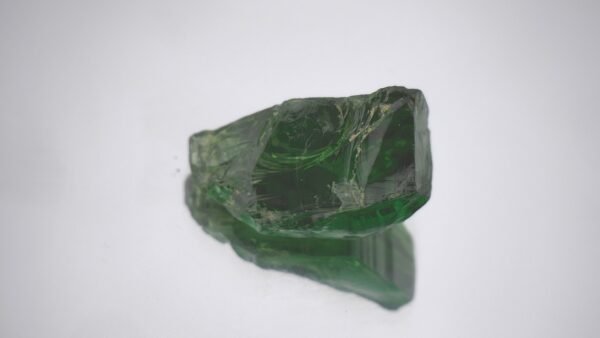
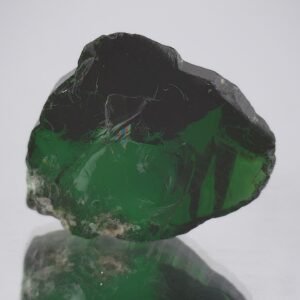
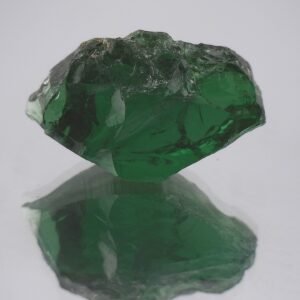
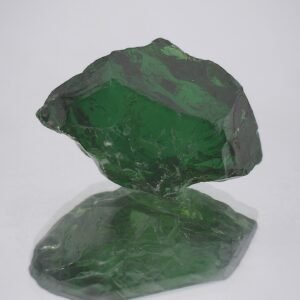
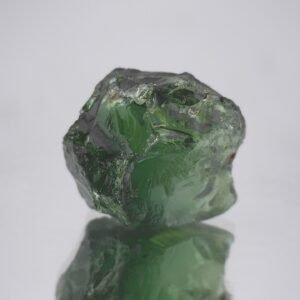
3.35CT Chrome Tourmaline Rough Evaluation
Geological Origins & Rarity
3.35CT Chrome Tourmaline Rough originates from a fascinating and relatively localized geological environment, primarily found in the mines of Tanzania, Nigeria, and occasionally Mozambique. These vibrant green tourmalines owe their color to the presence of chromium, hence the name ‘Chrome Tourmaline’. The formation process requires a unique combination of beryllium, aluminum, iron, and crucially, chromium, within pegmatitic granites. These granites are formed deep within the Earth’s crust and slowly cooled, allowing the elements to crystallize. The presence of chromium, even in trace amounts, is what distinguishes Chrome Tourmaline from other green tourmalines like Verdelite.
The rarity of Chrome Tourmaline stems from the limited availability of chromium-rich pegmatites. It’s not enough for the right granite to exist; the chromium must be present in a bioavailable form during the crystallization process. This makes high-quality, intensely colored Chrome Tourmaline, particularly pieces of significant size like this 3.35CT Chrome Tourmaline Rough, exceptionally scarce. Furthermore, the geological conditions must be stable enough to allow for the formation of well-formed crystals, free from excessive fracturing or inclusions. The rough stones often exhibit a natural hexagonal crystal habit, providing clues to the optimal cutting direction.
Understanding the geological origins of a 3.35CT Chrome Tourmaline Rough is crucial for assessing its potential value and inherent quality. Factors like the mine of origin can influence market demand, while the presence of specific inclusions can reveal details about its formation history.
Optical Physics & Color Saturation
The captivating color of a 3.35CT Chrome Tourmaline Rough isn’t just aesthetic; it’s a direct result of its unique optical physics. Tourmaline, in general, is a complex borosilicate mineral, but the inclusion of chromium ions (Cr3+) within the crystal lattice is what gives Chrome Tourmaline its intense green hue. These chromium ions selectively absorb certain wavelengths of light, primarily in the yellow and red portions of the spectrum, while reflecting and transmitting green light. This absorption process is responsible for the stone’s vibrant color.
The saturation and depth of color in a 3.35CT Chrome Tourmaline Rough are determined by the concentration of chromium and the stone’s crystal structure. Higher chromium concentrations generally lead to more intense color, but the way the light interacts with the crystal lattice is equally important. A well-formed crystal with minimal internal flaws will exhibit superior brilliance and color saturation. The refractive index of tourmaline is relatively high (typically between 1.614 and 1.666), contributing to its sparkle and fire. Pleochroism, the ability to exhibit different colors when viewed from different angles, is also a characteristic of tourmaline, and can be particularly pronounced in Chrome Tourmaline.
Evaluating the optical physics of a 3.35CT Chrome Tourmaline Rough requires careful observation under different lighting conditions. A skilled gemologist will assess not only the color itself, but also its clarity, brilliance, and the presence of any color zoning or inclusions that might affect the final gem’s appearance. The specific gravity (around 3.05-3.10) can also be used to confirm the stone’s identity and quality.
Master Cutter’s Bench Guide
Approaching a 3.35CT Chrome Tourmaline Rough on the master cutter’s bench demands a thoughtful and strategic approach. Before even touching a polishing wheel, a thorough examination of the rough is paramount. This includes identifying the crystal’s primary axis, noting any internal flaws or fractures, and visualizing the potential finished gem. The dimensions of this particular stone – 13.48×8.09×5.89mm – suggest a variety of cutting options, from classic emerald cuts to more modern and innovative designs. The goal is to maximize brilliance, color saturation, and yield, while also preserving as much weight as possible.
Given the potential for strong pleochroism in Chrome Tourmaline, precise orientation during cutting is crucial. Aligning the table facet perpendicular to the strongest color axis will ensure that the finished gem displays the most vibrant and appealing hue. Careful planning of the pavilion and crown angles is also essential to achieve optimal light return and fire. The cutter must balance the desire for a larger finished stone with the need to maintain excellent proportions and symmetry. A shallow cut will maximize carat weight but compromise brilliance, while a deep cut will enhance fire but reduce overall sparkle.
When working with a 3.35CT Chrome Tourmaline Rough, it’s important to use a steady hand and precise cutting techniques. The stone, while relatively hard (Mohs hardness of 7-7.5), can be brittle and susceptible to chipping or fracturing if subjected to excessive pressure or shock. A diamond-impregnated cutting wheel, combined with a consistent and controlled feed rate, is recommended. Finally, a meticulous polishing process is essential to bring out the stone’s full brilliance and luster. A well-cut 3.35CT Chrome Tourmaline Rough will be a testament to the cutter’s skill and artistry.
Investment & Yield Potential
Investing in a 3.35CT Chrome Tourmaline Rough, particularly one of this quality, presents a compelling opportunity for both gem collectors and jewelry designers. The increasing demand for rare and vibrant colored gemstones, coupled with the limited supply of high-quality Chrome Tourmaline, has driven up prices in recent years. Unlike diamonds, which are often valued based on the ‘4Cs’, the value of colored gemstones is heavily influenced by the intensity and beauty of their color. A vividly colored, well-cut Chrome Tourmaline can command a premium price in the market.
The potential yield of a 3.35CT Chrome Tourmaline Rough is a key factor in determining its investment value. A skilled cutter can maximize the finished carat weight while preserving the stone’s brilliance and color. The resulting faceted gem can then be used in high-end jewelry, such as rings, pendants, or earrings, or sold to collectors. The rarity of Chrome Tourmaline, combined with its striking color, makes it a highly sought-after gemstone for both investment and aesthetic purposes. The price of 167.5 for this rough allows a margin for cutting and polishing, whilst still retaining a high resale value.
Compared to other precious gemstones, Chrome Tourmaline offers a relatively attractive investment profile. While the market for colored gemstones can be volatile, the demand for rare and vibrant stones like Chrome Tourmaline is expected to remain strong in the foreseeable future. A well-chosen 3.35CT Chrome Tourmaline Rough, expertly cut and polished, can provide a significant return on investment over time. Furthermore, the unique beauty and rarity of Chrome Tourmaline make it a valuable addition to any gem collection, offering both financial and aesthetic rewards. This 3.35CT Chrome Tourmaline Rough represents a tangible asset with the potential to appreciate in value.
For a detailed breakdown of this variety, visit the GIA Gem Encyclopedia or explore our Lapidary Guide for professional 3.35CT Chrome Tourmaline Rough cutting tips.
Master Cutter’s Bench Note for 3.35CT Chrome Tourmaline Rough
Due to the potential for internal stress, pre-form the rough with a slow, gentle saw, following the natural crystal planes. This minimizes the risk of fracturing during faceting.
Technical Specifications
- Weight: 3.35CT
- Dimensions: 13.48×8.09×5.89mm
- Focus Keyword: 3.35CT Chrome Tourmaline Rough
Reviews
There are no reviews yet.